Multi-supplier · Manual desks + live supplier chat · Guarantees on process, security on handoffs
Subscriptions, donations, and account SKUs for resellers
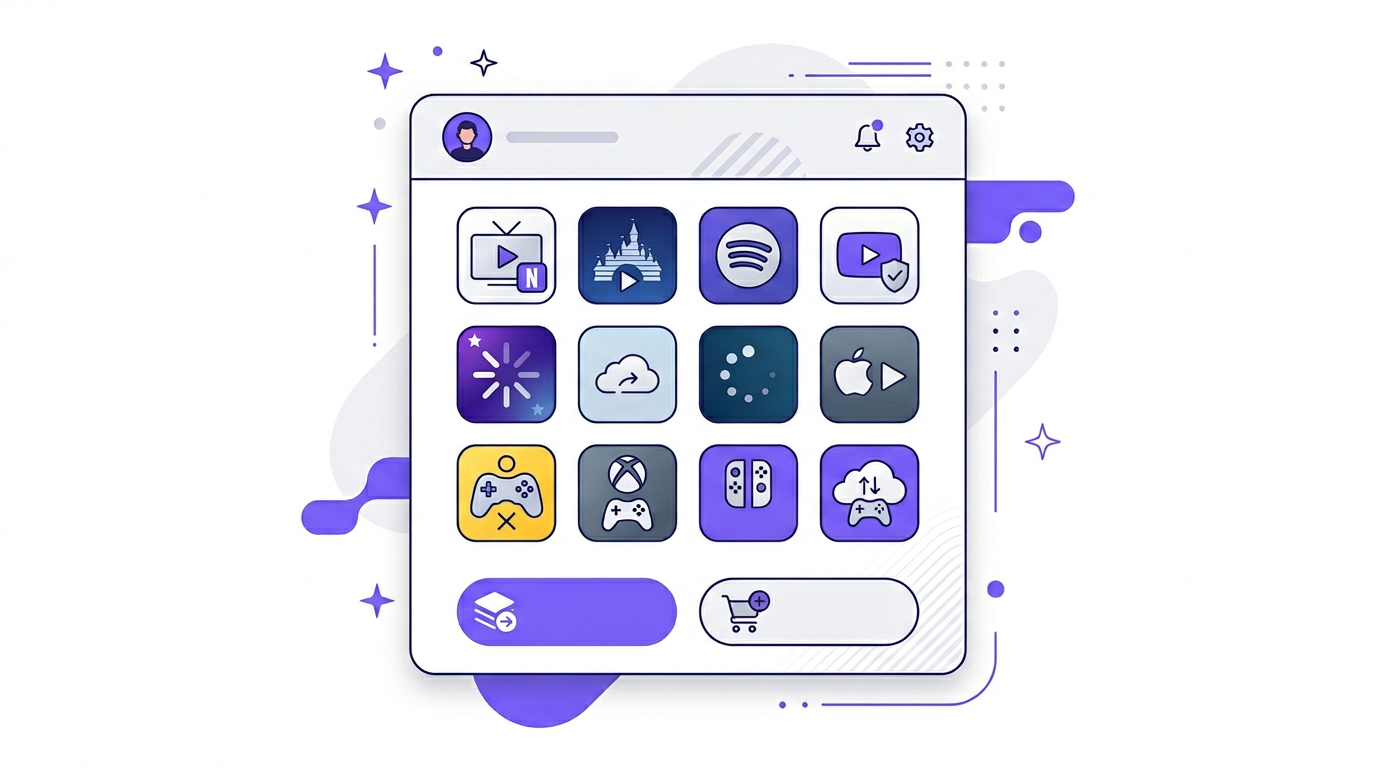
Beyond gift cards and UID top-ups, FazerCards aggregates subscription-style and account-heavy products: streaming and gaming memberships, in-game donation rails where publishers allow them, and both ready-made inventory accounts (games, active subs, positive wallet balance) plus orders that credit your customer’s own Xbox, Apple, or other first-party profiles. The catalog is fed by several suppliers with different automation maturity — some SKUs close in seconds through the same REST stack you already use, while others are explicitly manual: a supplier team provisions credentials, extends a subscription, or delivers an export after you place the request.
Why you see different suppliers and speeds
FazerCards is a marketplace of wholesale feeds, not a single warehouse robot. One line may be machine-verified PIN delivery, another may route to a partner who fulfills by hand during business hours, and a third may require KYC-style checks from the publisher side. Your dashboard and API responses show stock, SLA hints, and field requirements per SKU — treat each product row as its own contract with the underlying supplier, even though your balance and invoices stay unified on FazerCards.
Automated routes vs manual / on-request desks
When automation is available, webhooks and order objects behave like gift cards or game keys: place the order, poll or wait for the webhook, hand credentials or instructions to your buyer. Manual desks follow the same order identifiers, but status may sit in processing while a human purchases, redeems, or transfers entitlement on the supplier side. Never promise “always instant” across the whole subscriptions family — quote the behavior described on the live SKU and mirror statuses in your support tooling.
What typically sits in this family
Exact titles rotate with supplier agreements, but resellers usually merchandise combinations such as:
- Entertainment and creator subscriptions billed as prepaid digital products — subject to regional catalog rules.
- Console and PC platform passes or premium tiers (think Xbox ecosystem, PlayStation services, Nintendo online stacks, PC publisher subscriptions) when listed as cards, codes, or entitlement transfers.
- In-game donation or supporter packs where the publisher routes value to a streamer, clan treasury, or similar mechanic — always confirm field names and compliance banners from the API.
- Inventory accounts that already contain games, subscriptions, or stored wallet value versus flows that add credit only after the buyer proves ownership of their personal account.
Ready-made supplier accounts
Some SKUs ship as a supplier-controlled profile: you resell access to an account that already carries the advertised games, subscription months, or prepaid balance (for example Xbox profiles with Game Pass and wallet funds, or Apple media accounts with iTunes balance ready for your customer to secure). Delivery may be automated credentials, a handoff checklist, or a timed transfer — follow the fulfillment notes on the order because publisher ToS and resale policies differ by region.
Crediting your customer’s own accounts
Parallel to stocked accounts, many wholesale lines top up or renew what the buyer already owns: Xbox subscriptions or wallet credits tied to their Gamertag, Apple media balance on their Apple ID, or similar first-party identifiers. These flows usually demand exact login handles, region, or consent steps spelled out in the SKU — validate inputs in your checkout so support does not burn cycles on mismatched profiles.
When suppliers fulfill manually or only on request
Low-volume, high-fraud, or legally sensitive categories stay partially or fully manual. A supplier may list a product but only execute after you open a ticket with quantity and timing; another may require daylight hours in a specific timezone; a third batches purchases once per hour. The platform still tracks balance impact and webhook IDs — your job is to surface realistic timelines to the consumer and avoid advertising “API instant” where the catalog marks a human desk.
Live chat and supplier dialogue — core of the manual stack
Many subscription and account SKUs are not a faceless queue. Your workflow often includes a live chat or messenger-style thread with the supplier (or FazerCards operations coordinating them): you agree on quantity, region, acceptable nicknames or IDs, delivery window, and what happens if first-party validation fails. That conversation is what turns “manual” from vague delay into a traceable commitment — use it before you promise your own buyer a fixed minute count.
- Pre-flight checks: confirm SKU version, geo lock, and any buyer-side prerequisites (2FA, fresh invite links, account age) before funds move.
- Volume and pacing: negotiate recurring drops, cohorts, or batched purchases so your storefront does not oversell a line with a human cap.
- Edge cases in writing: refunds, partial completion, retries after publisher errors, and who re-attempts — spell them out in the thread so support has a paper trail.
- Handoff to your buyer: agree whether secrets go through the hub only, DM templates your team uses, or an extra verification step for high-value accounts.
What “guarantee” means for wholesale partners
FazerCards does not magically override Xbox, Apple, or any publisher’s rules — no honest wholesale platform can promise that. What we do provide is operational reliability around money and tickets: every funded order is tied to a platform-internal ID, status history, and mediation paths when a supplier misses a documented window or deviates from what was agreed in chat. Refund and clawback outcomes still follow supplier policy, publisher outcome, and the Terms — but you are not negotiating in the void; dispute narratives start from order metadata, not screenshots alone.
- Audit trails: timestamps, status changes, webhook payloads, and notes visible to you and to operations when escalation is needed.
- Mediation: when automation and supplier SLAs disagree with reality, FazerCards support routes the case using the same identifiers your integration already emits.
- Honest SLAs: we align copy on this site with “discuss in chat + read the live SKU” rather than universal sub-second promises for manual families.
Safety for credentials, balances, and buyer data
Manual fulfillment means more human touches — so hygiene matters more, not less. Treat supplier chat, dashboard exports, and webhook payloads as sensitive: restrict access on your side, rotate API keys when staff changes, and never paste buyer passwords or full account dumps into public channels. FazerCards infrastructure uses encrypted transport; your obligation is to avoid leaking what the supplier sends you and to teach your end customers safe receipt steps (change password after handoff, enable 2FA, segregate resale accounts from personal banking identities).
- Prefer closed channels: supplier coordination belongs in sanctioned threads or the hub, not ad-hoc social DMs that forget context next week.
- Least privilege: only the teammates who operate manual desks see fulfillment payloads; separate roles for finance and L1 support where possible.
- Buyer education: short, plain-language instructions reduce “I clicked phishing” incidents that no wholesale contract can insure against.
Operational hygiene for account and subscription resale
You remain responsible for truthful consumer marketing and for handling credential handoffs safely (encrypted channels, no public pastes, clear refund boundaries before secrets are revealed). Brand names on this page illustrate typical categories, not a guarantee that every storefront line is available in every region today — always read live catalog metadata, geo locks, and supplier disclaimers before you quote.
Frequently asked questions: subscriptions & accounts
- Is every subscription SKU fully automated?
- No. Many behave like instant digital goods, but others explicitly depend on manual supplier desks. Use each product’s notes and webhook states instead of a blanket SLA.
- How do “ready accounts” differ from crediting my buyer’s account?
- Ready accounts are inventory profiles the supplier (or FazerCards partner) hands over with stated contents. Buyer-account flows leave ownership with your customer and only add time, balance, or entitlement after identifiers pass validation.
- Can I mix subscriptions with game keys and gift cards in one integration?
- Yes where the catalog exposes those families. Separate endpoint groups may apply per product type, but balances, authentication, and webhook secrets stay shared across the account.
- What about in-game donations?
- When publishers publish donation SKUs, they behave like any other parameterized wholesale product — recipient identifiers and compliance text come from the API. If a line is missing from your region, it is usually a supplier or policy constraint, not an integration bug.
- Who supports the buyer if Xbox, Apple, or another publisher refuses redemption?
- First-party publishers make the final entitlement decision. Collect error screenshots and order IDs, escalate through FazerCards support, and avoid promising outcomes that depend on a platform you do not control.
- Is live chat with the supplier required for every manual order?
- Not always — some desks run on strict ticket templates. Whenever the SKU or supplier flags negotiation, batching, or fragile identifiers, treat chat (or an equivalent documented thread) as mandatory before you quote delivery time to your own customer.
- Does FazerCards guarantee entitlement on third-party platforms?
- No. We guarantee disciplined order handling, traceability, and fair escalation against supplier commitments reflected in the platform. Publisher acceptance remains their decision.
Add subscription & account SKUs to your catalog
Open a free account, start the Gold trial, and browse live lines with automation flags plus manual desks.